Those With Fetal Alcohol Spectrum Disorders Need Modifications
Fetal alcohol spectrum disorders (FASD) are much more common than people think. One in seven pregnancies is alcohol-exposed and conservative estimates show that 1 in 20 children live with an FASD. In some populations, the rates are much higher—a child with FASD is 17 to 19 times more likely to be in the child welfare system than one without an FASD. And teens and adults with FASD have contact with the justice system at a rate 30 times higher than those without.
Why?
FASDs Are Brain Issues
Alcohol easily crosses into the placenta and is a teratogen, which means it mutates developing fetal cells—in both the brain and the rest of the body. The fetus circulates alcohol throughout its system repeatedly as the parent’s liver gradually metabolizes it, turning the amniotic sac into a holding tank of sorts. This gives the alcohol time to oxidize and break down fetal cells.
The central nervous system of the fetus—consisting of the brain and spinal cord—develops throughout the entire pregnancy. This means that while physical disabilities may occur when the parent drinks during critical windows of time, life-long, brain-based disability may occur with any drink.
Brain Disability = Behaviors
The damage caused by alcohol changes the way that brains of individuals with an FASD process information. The corpus collosum tends to be smaller, with fewer pathways connecting the left and right sides of the brain. The pre-frontal cortex—the seat of executive functioning like making good decisions—can be smaller as well. Therefore, FASD may cause:
- Memory and attention issues
- Poor social skills
- Impulsive behavior
- Sensitivity to light, touch, or sound
- Hyperactive behavior
Not Purposeful, Willful Behaviors
People with an FASD often have average or even high IQs, along with high creativity and verbal fluency. The vast majority do not not have the facial differences found with fetal alcohol syndrome. In other words, they are not easily recognized as people with a disability. It’s now understood that they are more adept at verbal expressive language than receptive language. They “sound normal” and can repeat back what they’ve heard, but in fact do not understand what has been discussed.
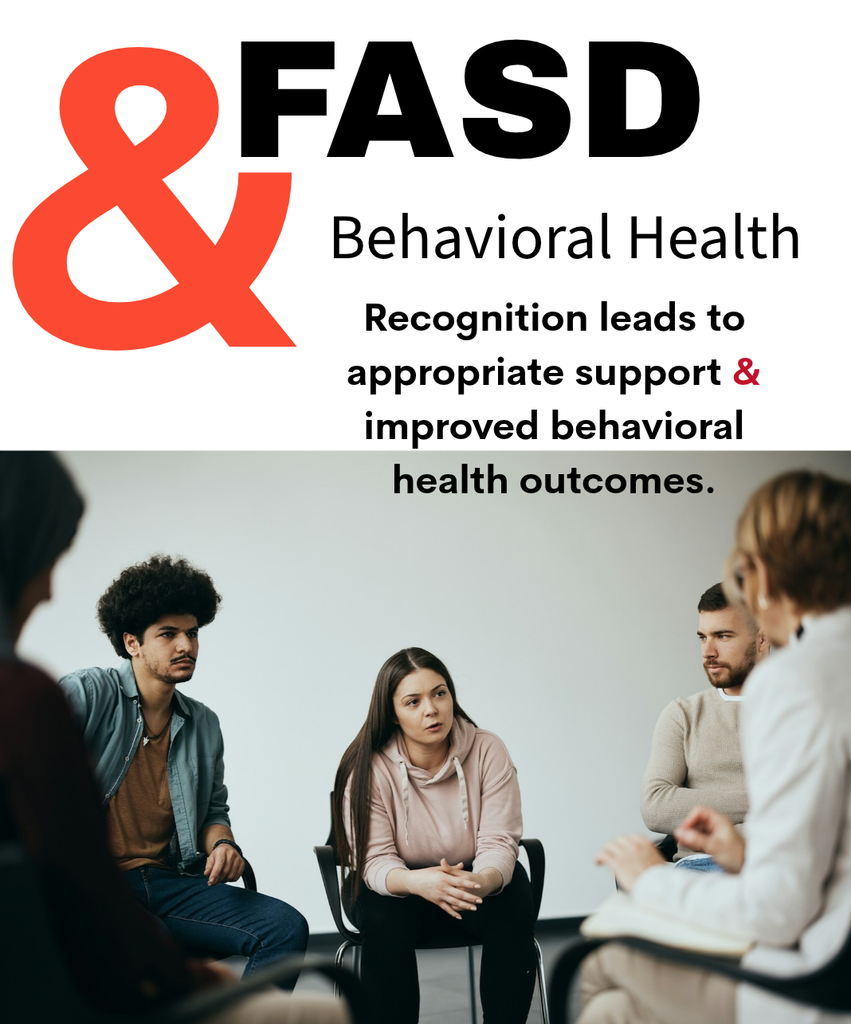
The result? In school, at home, in treatment, or in prison, individuals with an FASD are assumed to be willful and rebellious. Around 1 in 400 will be properly diagnosed, leaving 399 entirely misunderstood. Dan Dubovsky, MSW, who has worked for decades to teach systems how to support those with FASD, has found common traits:
- Often would rather be seen as “bad” than as “dumb” or “crazy”
- Don’t do well around others with challenging behaviors, as they learn by modeling
- Tend to be friendly and likable, but are frustrating to be around, as they promise to change their behavior but cannot
- Do poorly when given a list of complex tasks, though they can perform each task when broken down and offered help
Behavioral Interventions Don’t Work
There are no evidence-based interventions that work for every single person. When we’re using recommended approaches and still have students or clients who persist with undesirable behaviors, our question should be, “What are we missing here?” The following common strategies will rarely result in the desired behaviors when used with someone with an FASD:
- Time outs
- Rewards and consequences
- Point, star, sticker, level, or other privilege systems
In order to succeed with a reward and consequence system, one has to be able to think abstractly, with an understanding of historical time vs. the future and the present. People with FASD tend to think concretely and literally, grounded in the present moment. They want to earn levels, stickers, and stars, and can even likely repeat back what they need to do (remember: normal to high IQ and good expressive communication), but may not be able to figure out how to succeed, nor why they are being denied the rewards that their peers are earning.
As a result, they fail, because systems aren’t set up to help them. They fail at home and at school. At addiction or mental health treatment. And repeated failure makes flourishing impossible.
Modifications & Adaptations
Every one of our systems, from school to treatment to prison, contains people with FASD who have low self-worth and have given up because no one has offered accommodations that allow them to succeed. The following modifications provide work-arounds for the parts of their brains damaged before they were born.
- Less is better- fewer objects in their room, fewer items or steps on their to-do list
- Simplify routines- schedules need to stay the same long enough to make it past damaged short-term memory into long-term memory banks
- Prepare early and often for upcoming changes
- Use appointment reminders, such as on a phone, and program in the time to leave, not the appointment time
- Repetition is key—more than you would expect to be necessary based on the individual’s intellectual abilities
- Use visuals (a picture of what you’d like their desk or room to look like) and simple check lists
- Offer one rule or direction at a time and ask for it to be repeated back
- Unless a person with FASD is being physically aggressive, use time-ins, not time-outs. It’s often helpful for them to be near a trusted person when completing tasks
Don’t use negative, natural consequences in hopes that an individual will remember the rules in the future. The consequence can be given, and should be immediate and short-term, but know that it will not change future behavior. Because verbal receptive processing is damaged, appealing to the other senses works better. Take the time to model the desired behavior and role-play scenarios for better understanding, repeating often.
Strengths & Strategies Approach
People with FASDs have many strengths. Hear directly from mom Rachel about her daughter, Patima’s, many positive qualities.
Other strengths shared by many with an FASD include these:
- Affectionate and loving
- Helpful and generous
- Non-judgemental
- Good with young children, the elderly, others with disabilities, and animals
- Artistic and musical
- Hands-on and mechanical
- Verbal and outgoing
- Resilient and persistant
- “Each day is a new day” mentality
To summarize, fetal alcohol spectrum disorders are far more common than we realize, and underdiagnosed. We can try out behavioral modifications with students and clients who are struggling and see if those help them to succeed. We can put away our assumptions that people are being obstinate and that they’ll get with the program when they’re ready. We can move toward a worldview that brains are all different, and need to be met with different strategies in order for the human the flourish.
For more FASD resources go to:
- FASD United
- Proof Alliance
- St. Christopher’s Hospital for Children– Dept. of Special Needs
- National Institute on Alcohol Abuse & Alcoholism
- Centers for Disease Control & Prevention
September 25, 2026 | 11am – 12pm
Fetal Alcohol Spectrum Disorders: Underdiagnosed & Preventable With Proper Support by Carol Seifert, RN
Unlike drugs such as fentanyl, or cocaine, alcohol is a teratogen — a substance that interferes with normal fetal development and causes congenital disabilities. Fetal alcohol spectrum disorders (FASD) is an umbrella term used to describe the range of effects and disabilities that can occur in an individual with prenatal alcohol exposure. Learn about the impact of prenatal alcohol exposure on attention, behavior, learning, language, memory & physical health; characteristics of the FASDs; and strategies and resources to support individuals with FASD. [REGISTER TODAY!]