Natural Doesn’t Mean Safe
Kratom and its related products are derived from a Southeast Asian plant, and are sold online and at gas stations and vape shops with claims that it relieves pain or enhances mood. Use in both PA and the U.S. is on the rise and in the news.
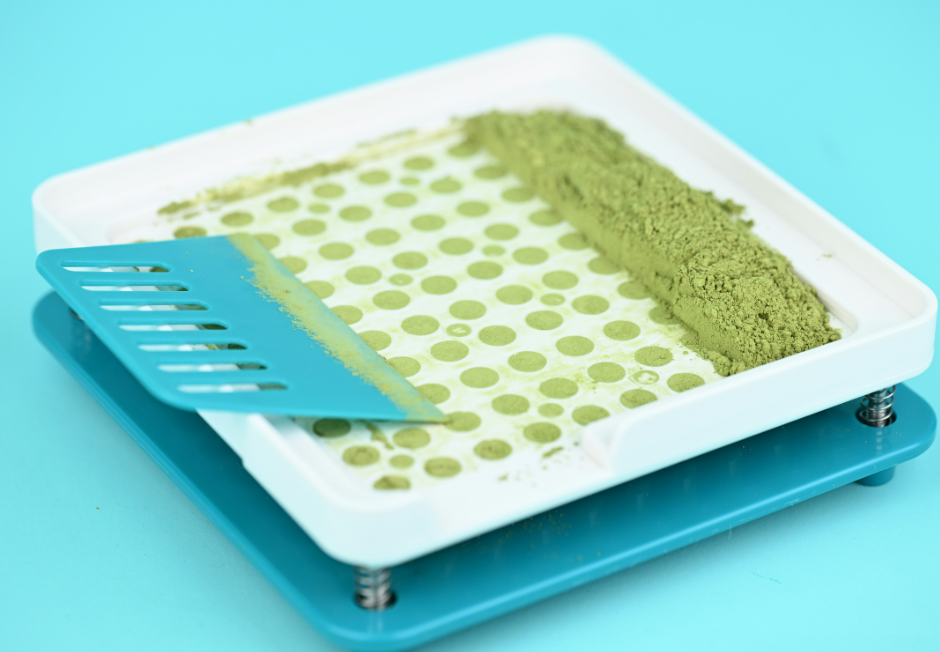
Kratom is sold as a powder, capsules (like those being assembled above), teas, and liquid shots. Right alongside it you’ll often find 7-OH products: lab-produced chemicals made from the naturally-occurring opioids found in the kratom leaf. Concentrated for quick effect, 7-OH products include chewable tablets, vapes, gummies, and drink mixes and come with a risk for overdose and other acute health issues.
Kratom products are likely to have nature-themed packaging promoting wellness. For many, “natural” reads as “safe”. Easy availability of this so-called “gas station heroin” implies that using these substances offers low risks. From a public health perspective, that gap in knowledge is a risk factor in itself.
The Science
The primary active compound in the kratom leaf, mitragynine, binds to the same mu-opioid receptors targeted by morphine, fentanyl, and other opioids. Mitragynine is a partial agonist, meaning it activates those receptors less fully than a drug like morphine. This is one reason people assume that kratom is gentler. But partial doesn’t mean harmless: kratom can produce euphoria, tolerance, physical dependence, and withdrawal, just like other opioids.
One reason for this: when the body metabolizes mitragynine, it converts some of it into 7-hydroxymitragynine (7-OH), an opioid up to 10 times more potent than morphine. So at low doses, kratom energizes. At higher doses, it causes sedation, nausea, tremors, and hallucinations, in addition to a high—just like other opioids.
Also notable:
- Research links mitragynine to heart arrhythmias and have found that it’s toxic to human neuron cells.
- Chemists have created other kratom-derived compounds, including mitragynine pseudoindoxyl (MGPI)—a potent opioid that federal authorities moved to control in August 2026. MGPI was involved in at least 56 overdoses in 2025 and 2026, 48 of them fatal.
Kratom Trends
- More than 5 million people in the U.S. had used kratom as of May 2026, including more than 100,000 children ages 12-17.
- Adults ages 21 to 31 reported the highest use.
- Reports to national poison centers involving kratom rose 1,200% from 2015 to 2025, reaching a record of 3,434 calls and other reports in 2025.
- Kratom was linked to more than 5,200 overdose deaths from 2020 to 2024. Many of those deaths involved other substances, so kratom’s exact role is unclear.
- Anecdotally, clients withdrawing from kratom have been showing up in Central and Southeastern PA inpatient treatment centers for a number of years in considerable distress.
Products are increasingly concentrated with inconsistent ingredients. Extracts and “enhanced” products, including flavored gummies and drinks that can appeal to teens and young adults, may carry far more potent compounds than the leaf itself, and consumers usually can’t tell what’s inside. Tragic recent deaths, including two college students, have pushed kratom into the national spotlight.
The Shifting Policy Landscape
Rules on kratom vary by state and sometimes by city, and federal action is still evolving. The FDA has said 7-OH is not lawful in dietary supplements or foods, which means products sold that way are already out of compliance with federal rules. The U.S. Dept. of HHS and the DEA have also stated that they have not found 7-OH or the related compound MGPI to be safe at any level in concentrated products, and announced plans to change 7-OH above a set threshold to Schedule I, with an order possible on or after November 13, 2026.
In Pennsylvania, the House unanimously passed House Bill 2657 in October that would allow registered retailers to sell natural leaf kratom to adults 21 and older with caveats: child-resistant packaging, plain packaging that doesn’t appeal to minors, and a tax added. Products containing more than 0.5% of 7-OH would be banned. The PA Senate Health & Human Services Committee did not take up or vote on the proposal before breaking. It is scheduled to reconvene on November 17, 2026.
More locally, the district attorneys from Bucks and Chester Counties called for an emergency ban on kratom products, as Massachusetts did in August. Berks County DA John Adams followed up this request with one of his own a week later. Philadelphia city council has passed two bills to regulate kratom which await a decision from Mayor Cherelle Parker.
Risk Factors to Address
While lawmakers work out the guardrails, community members can educate themselves about kratom’s risks.
- Misperception of safety–“Natural,” “herbal,” and “supplement” language downplays the risk of dependence, addiction, and withdrawal.
- Easy, everyday access–Kratom is sold in ordinary retail settings with little age-gating or product consistency in many places.
- Unpredictable potency–Concentrated and enhanced products raise the risk of overdose and dependence.
- Combining substances–Mixing kratom with alcohol, benzodiazepines, other opioids, or other sedatives increases risk.
- Self-treatment–People managing chronic pain, anxiety, depression, or trying to cut back on alcohol or other opioids may turn to kratom believing it’s a safer substitute.
- Pregnancy–Prenatal exposure can lead to opioid withdrawal in newborns.
- Gaps in screening–Kratom use often goes unasked about in healthcare, school, and treatment settings.
Protective Actions to Take
Effective prevention is done throughout the community—not just at the Capital.
- Accurate, brain-based information–Kratom and it’s offshoots are opioid-acting substances, not herbal supplements for wellness. Substance use before age 25 primes the brain for addiction later on.
- Strong family and youth messaging–Parents and caregivers can talk with young people about marketers’ hidden agendas in promoting kratom, and why “legal” doesn’t automatically mean “harmless”.
- Screening and clinical awareness–Encourage providers to ask about kratom when assessing substance use, withdrawal symptoms, or unexplained adverse effects. Kolodny and Holstege suggest treating kratom use disorder with approaches used for opioid use disorder.
- Access to care for pain and mental health–When people have real options for managing pain, stress, and cravings, they’re less likely to self-medicate with unregulated products.
- Community partnerships–Coalitions, schools, healthcare systems, treatment providers, and public health agencies can share what they’re seeing locally and respond together.
- Local monitoring–Poison center data, ER visits, school and treatment-program feedback, and community surveys can show whether kratom is showing up in a community.
The goal in educating ourselves and others about kratom isn’t to create alarm. It’s to make sure people have the information they need to make informed choices. We learned a lot from the opioid crisis about how misperception, access, and unmet health needs combine to cause harm, and kratom is another chance to apply those lessons early on. As a community, we can apply prevention principles to lower the risks and increase well-being for all.
Kratom-Related Resources
- What Parents Need to Know About Kratom: The Legal, Addictive Substance Harming Kids
- Kratom 7-OH: Partnership to End Addiction
- Kratom | National Institute on Drug Abuse
- Kratom | Nemours KidsHealth
- Kratom and Teens: Risks, Side Effects and Warning Signs for Parents
- Kratom | Parents Lead North Dakota
- FDA and Kratom
- Kratom- DPA Fact Sheet
- Kratom- Prevention Tech Transfer Center
- Kratom- DEA Fact Sheet
Learn more about prevention tools in our Addiction Resource Hub!